

HOLY WEEK
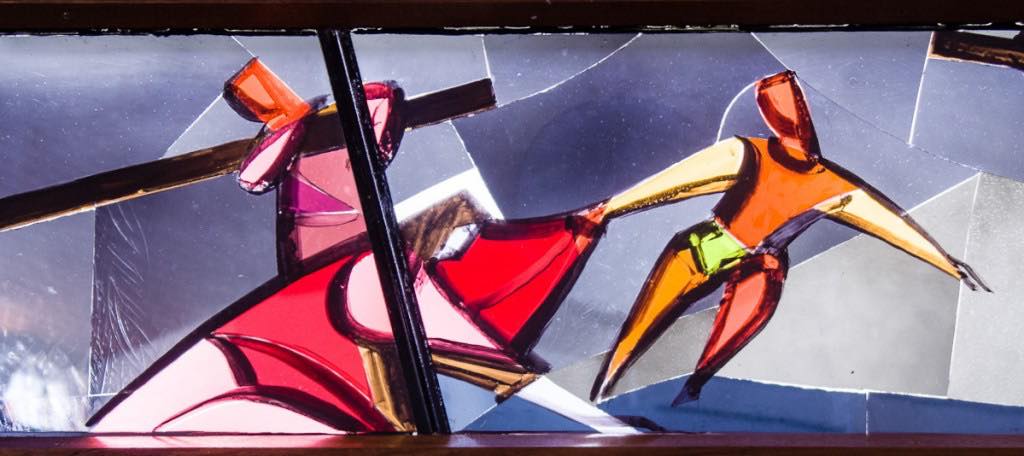
As we enter Holy Week, we’re delighted to share a unique Stations of the Cross resource from Brian and our friends at First Church. Feel free to use it in your own space at a time that works for you.
Grace and Peace ❤️🛟

While we move through Holy Week, as part of our ongoing Rewilding Faith series in collaboration with Harbour Faith Community we developed this version of the Stations of the Cross that enters into conversation with our current contexts.
(Link in comments)
——
“The Stations of the Cross is an ancient practice — a way of walking, in imagination and in
body, the road that leads toward death. It emerged from pilgrims who longed to walk the
streets of Jerusalem but could not make the journey. So they made the journey where they
were. Fourteen stopping points, fourteen stations, each marking a moment in the story of a
man being executed by an occupying empire.
The practice is most familiar to our Catholic and Anglican friends, but it belongs to no single tradition. You do not need to hold any particular belief to walk this road. You do not need to be certain of anything. What the stations ask is simpler and harder than belief: they ask you
to look. To stay present. To refuse, for a little while, the comfort of turning away.
Let’s be honest about what that costs. Most of the people closest to Jesus could not do it.
The disciples — the ones who had followed him for years, who had shared meals with him,
who had made large promises — most of them were gone by the time he was crucified. They
had scattered. What remained at the foot of the cross was a small, unlikely group. A few women. A beloved friend. People who perhaps had less to lose, simply could not
bring themselves to go — or perhaps the ones who had the courage to remain.
These stations are drawn from what is happening right now — in our city, across these
islands, and around the world. Some of what you will encounter here is contested. People of genuine goodwill disagree, sometimes sharply, about what should be done. The stations are not asking you to resolve those disagreements or to abandon your own views. They are asking something different, and something harder: can you remain? Can you keep your face turned toward those who are suffering, even when the questions around them are ones you
are still working out? Can you stay at the cross, even without the answer?
Very few people managed that in the story of that Friday. But some did. That is what this
practice is asking of us.”
(Feed generated with FetchRSS)